
Binge-Restrict Cycle 101: How Hormones and Restriction Are Connected
Ever promised yourself you'd "be good" with food, only to end the day knee-deep in snacks or feeling totally out of control? If this sounds familiar, you are not broken, and it is not a willpower issue. It is your body trying to protect you.
The binge-restrict cycle is often framed as a mindset problem, but there is far more happening beneath the surface. When food intake is restricted, even unintentionally, it triggers powerful hormonal and physiological responses designed to keep you alive. These responses increase hunger, cravings, and the urge to binge.
Let’s break down how the binge-restrict cycle works, how hormones play a role, and what actually helps interrupt the cycle by working with your body instead of against it.
What Is the Binge-Restrict Cycle?
The binge-restrict cycle occurs when periods of food restriction are followed by episodes of overeating or bingeing. Restriction can look many different ways, including skipping meals, cutting out foods, eating “as little as possible,” or trying to compensate for previous eating.
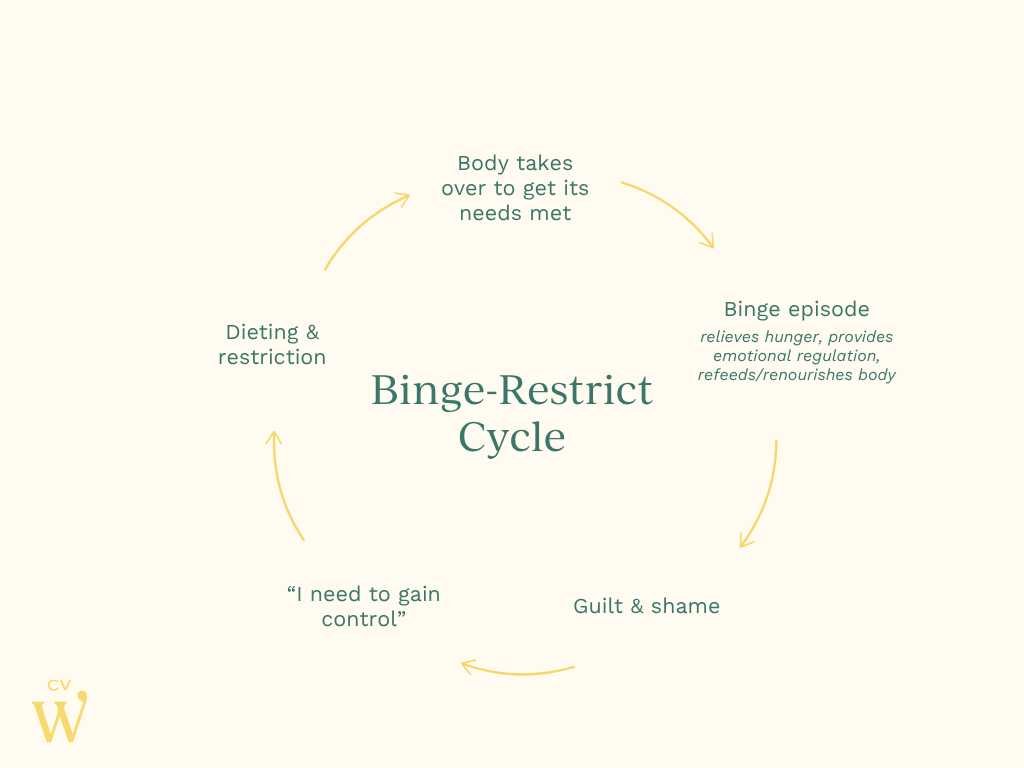
The cycle often follows this pattern:
You restrict food or try to “be good”
Hunger and cravings intensify
You binge or eat past fullness
Guilt or shame sets in
Restriction resumes
This cycle is exhausting and can feel deeply discouraging. But it is not a failure of discipline. It is a predictable biological response to restriction.
Your body is wired for survival. When it senses food scarcity, it reacts in ways designed to keep you safe.
Why Restriction Triggers Bingeing
When the body perceives restriction or famine, it shifts into protection mode. This response is influenced by your body’s weight regulation system and set-point range, where it feels safest and most stable.
Restriction sends a message to the brain that food is unreliable. In response, the body increases hunger signals, lowers energy expenditure, and heightens the drive to eat. These changes are not conscious choices. They are automatic survival mechanisms.
This is why bingeing so often follows restriction, even when restriction was unintentional or driven by “health” goals.
How Restriction Impacts Hunger Hormones
Understanding hormones helps explain why the binge-restrict cycle feels so powerful and hard to break.
1. Ghrelin (The Hunger Hormone)
When you don’t eat enough, ghrelin levels rise. Ghrelin tells your brain it’s time to eat, and when it builds up after restriction, hunger can feel overwhelming. This isn’t about failing or having no control. It is your body demanding nourishment.
2. Leptin (The Satiety and Fullness Hormone)
Leptin helps regulate fullness, metabolism, and energy balance. Chronic restriction, dieting, and weight cycling can disrupt leptin signaling, making it harder to recognize fullness and feel satisfied. When leptin signaling is impaired, the body remains in a state of perceived deprivation.
3. Cortisol (The Stress Hormone)
Restricting food increases physiological stress. Cortisol levels rise, which can:
Intensify cravings, especially for quick energy foods
Disrupt sleep and mood
Make it harder to tune into hunger and fullness cues
Food restriction is stressful for the body, even when it is mentally framed as “healthy.”
The Role of Blood Sugar and the Nervous System
Going too long without eating can cause blood sugar to drop. When this happens, the body seeks fast energy. Cravings spike, focus drops, and it becomes harder to make balanced decisions around food. Bingeing is often the body’s attempt to stabilize blood sugar quickly, not a loss of control.
At the same time, the nervous system responds to perceived famine by increasing food-seeking behavior and decreasing feelings of safety. This survival response makes bingeing more likely, not less.
How to Break the Binge-Restrict Cycle by Working With Your Body
Getting out of this cycle isn’t about more rules. It’s about supporting your body and your hormones so you can finally feel more at peace with food. Intuitive Eating offers a framework to work with your body and find this peace.
Here’s where to start:
1. Eat regularly, every few hours, to keep blood sugar stable
2. Respond to hunger early before it becomes overwhelming
3. Let go of rigid food rules that keep you stuck in all-or-nothing thinking
4. Prioritize satisfaction, because feeling deprived only fuels the cycle
5. Get curious about your patterns instead of judging yourself
When the body feels consistently nourished, hormonal signals begin to regulate, cravings soften, and eating becomes more stable over time.
If you are stuck in the binge-restrict cycle, it is not a personal failure. It is a sign that your body has been trying to protect you in the face of restriction. Understanding how hormones, blood sugar, and the nervous system respond to food scarcity helps explain why this cycle feels so difficult to escape. Healing begins by supporting your body, not fighting it.
You deserve a relationship with food that feels calm, connected, and sustainable.
If bingeing has been part of your experience, this is work we support clients with every day. Together, we can build a more peaceful approach to eating that honors your body and moves away from shame and burnout. Book an appointment to learn more.